
Decoding Biology
to End Disease.
Synteny unifies sequence, structure, and physics to learn the hidden logic of life — the laws of biological cognition. This gallery documents the brand system, the source footage, and the research behind a future film.
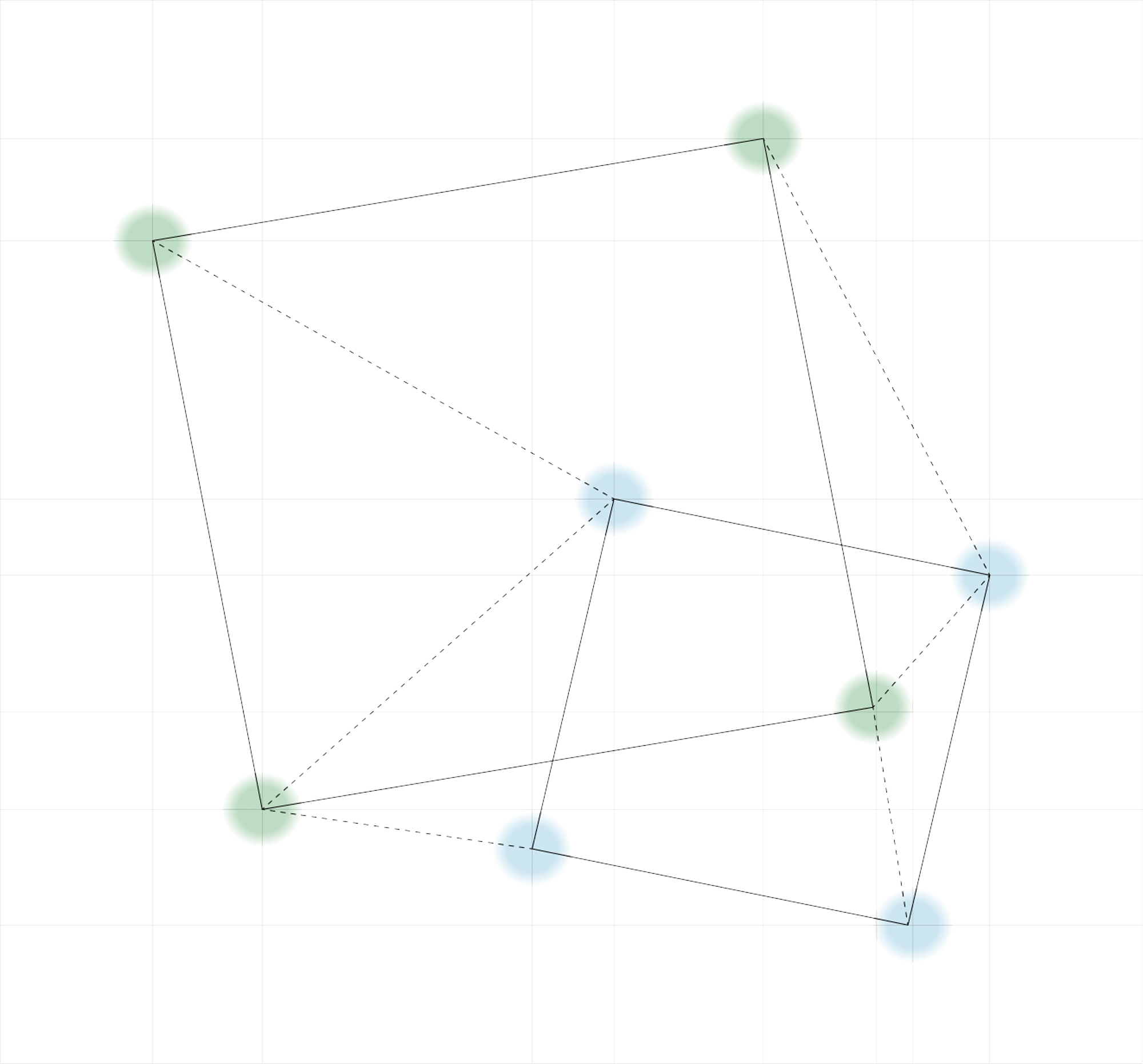
A palette of six, set in a hairline serif.
The identity is botanical and restrained. Two greens do the brand work; cream and ice blue are quiet section washes; hairlines are translucent black. Display type is a weight-100 serif against Inter light. Every value below is evidenced from synteny.ai's own stylesheet.
#15331FDeep forest green. Structure, footer, headers.#BEDCC3Pale leaf green. The one accent moment per view.#F7F4ECCream. Warm neutral section wash.#CCE6F1Pale ice blue. Glow at rest, tabs.#F2F3EDGreen tint. Lightest wash.#EBF5F9Ice blue wash.#FFFFFFCanvas.#000000Text. Hairlines at 50% / 30% black.Programming DNA.
A Microsoft Research film, 3 minutes 33 seconds, directed by Sita Narayan-Dinanauth, filming and editing by Cambridge Filmworks, animations by Equinox Graphics. Its narrator is Dr Neil Dalchau — now Chief Research Officer at Synteny. The arc of the film is the arc of the company: a hard problem, a programming language for biology, an honest admission of infancy, and a horizon of precision medicine.
Clip 1 · 0:11–0:20 · "Little molecular systems that run in a test tube, or maybe even in the live cell."
Clip 2 · 3:42–3:55 · "Detect and treat disease to a level of precision that has not been possible so far."
Full film · 3m33s · Programming DNA, Microsoft Research
Source: youtube.com/watch?v=sL2I8Fqu9HI. Microsoft Research production; reproduced here as provenance research, not Synteny marketing material.
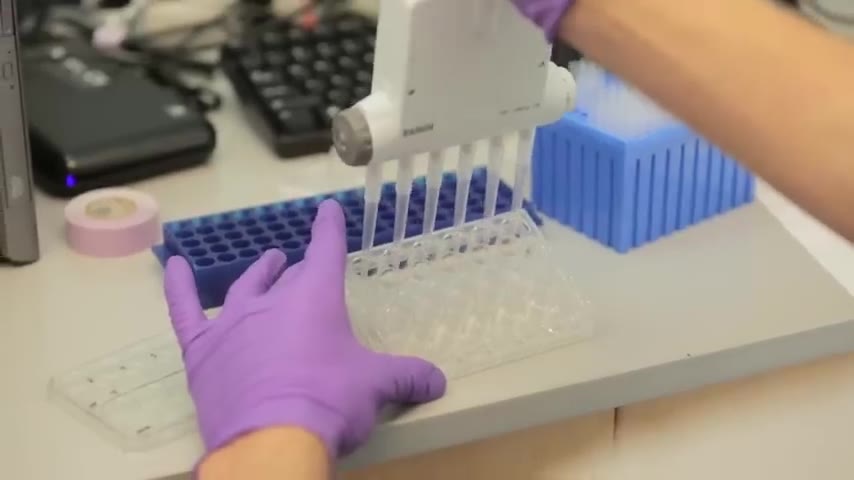
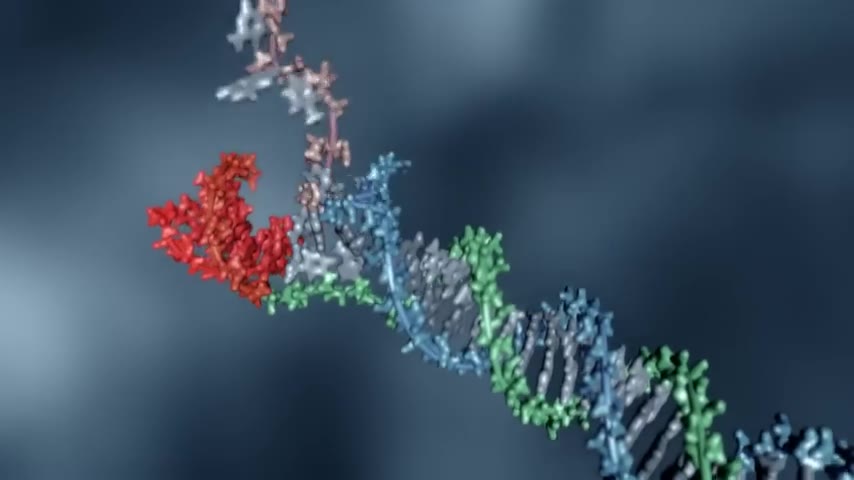
"DNA is highly programmable, just like a computer, and we can program a whole range of complex behaviors using DNA molecules."
Dr Neil Dalchau, Programming DNA (Microsoft Research)Frontier AI, programmable biology.
MANIFOLD™
The model suite that "decodes the rules that govern all molecular interactions": foundation models, generative energy models and discriminative binding models, unified across sequence, structure and physics.
The data foundry
Massively-parallel reporter assays screen millions of AI-designed molecules per cycle; a corpus of hundreds of millions of binding interactions supplies the hard negatives that make models honest.
First application: TCR T cell engagers
Logic-gated molecular recognition — AND, OR, NOT — aimed at intracellular targets in solid tumours, cell-specific depletion in autoimmunity, and precision payload delivery. Partnering offers span validation, target discovery, co-development and licensing.
"We're not limited by samples and examples — we're discovering the rules that govern all molecular recognition."
synteny.ai/platformThe team behind the platform.
Lilly Wollman
Co-founder & CEO. Formerly co-head of Growth Equity at Generation Investment Management. Computational Biology (Cambridge), Mathematics (Dartmouth).
Jamie Blundell
Co-founder & Chief Scientific Officer. Leads the Blundell Lab, Early Cancer Institute, Cambridge; pioneer in quantitative cancer evolution.
Neil Dalchau
Chief Research Officer. Joined in January 2022; formerly Principal Researcher at Microsoft Research. Cited by 4,521 on Google Scholar.
Josh Meyers
Led target identification and development of Immunocore's KIMMTRAK, the first approved TCR therapy.
Andrei Nica
Ex-UiPath. Reinforcement learning, generative modelling, large language models; building Synteny's agentic layer.
Jennifer Carter
Director, Strategy & Operations.
Sources: synteny.ai/future; syntheticbiologysummit.com speaker biography; ndalchau.github.io; Google Scholar. Company founded 2021, London; presence in San Francisco and Zurich.